CULTURE · 2026-08-15
Banchan, Main, or Japchae-Bap? How Koreans Actually Serve It
By Japchae Curator
Small plate or next-day lunch box staple — portion and placement change what japchae means at the table.
TL;DR
Small plate or next-day lunch box staple — portion and placement change what japchae means at the table.
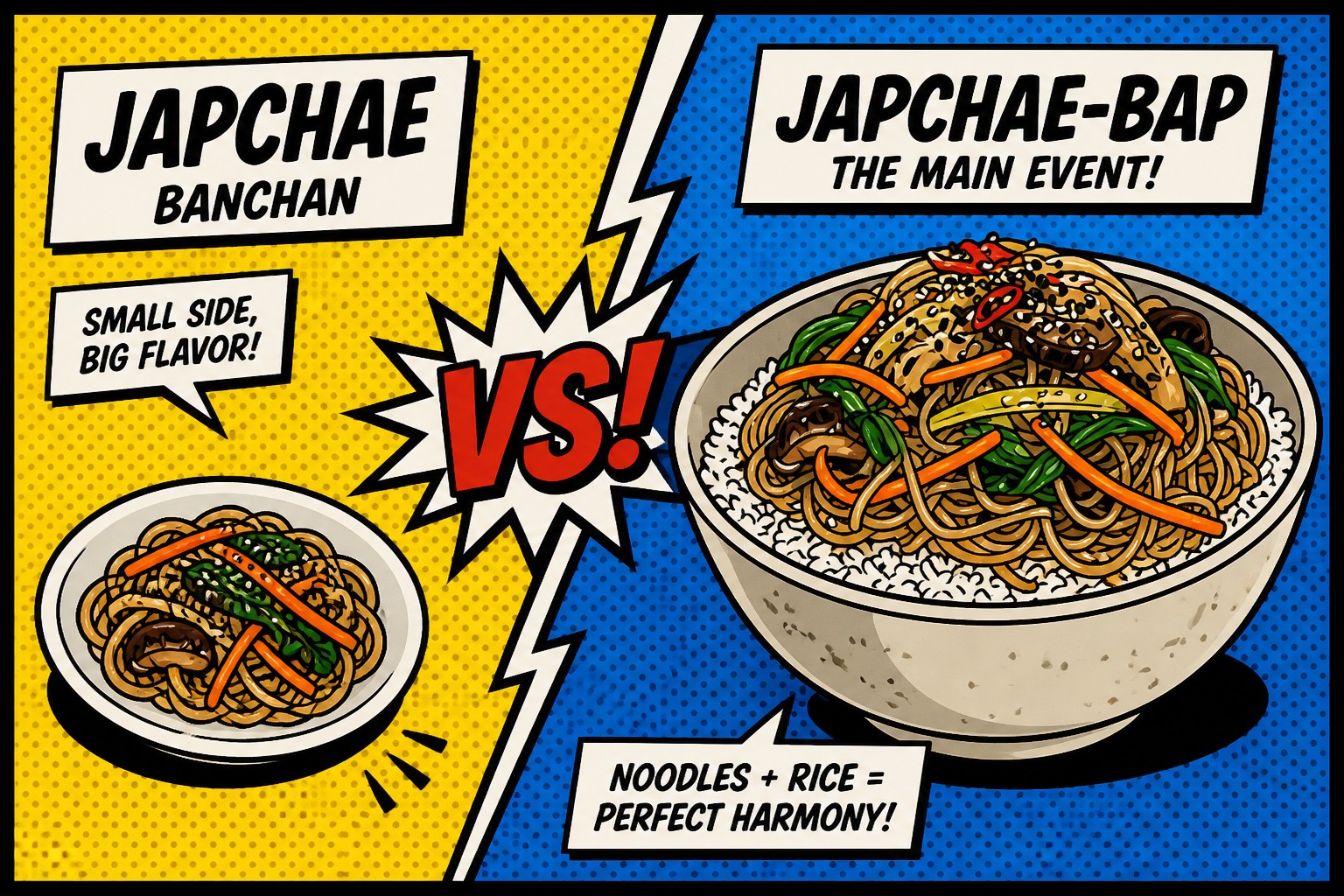
At a full Korean table, japchae is banchan, not the star — a 150g mound among 8–10 sides, there for color and chew between bites of jjigae and gui. Portion it small when the table is crowded; it cleanses more than it fills.
As jumeok-bap or party tray, japchae can carry the meal. For japchae-bap, pile japchae over rice with a fried egg, gochujang drizzle, and kimchi — the noodles season the rice so no separate sauce is needed. It is an honest leftover transformation that beats plain fried rice.
Street and market japchae leans saucier and sweeter to pair with tteokbokki and eomuk skewers; home holiday japchae leans cleaner and more sesame-forward to pair with galbi-jjim and jeon. Match sweetness to your neighboring dishes, not to a single absolute.
In a dosirak, japchae is the cold-stable carb that rice cannot be without a thermos. Pack japchae at the center of the box, rice to the side, protein on top so its juices season downward without soaking. That layout is lunch engineering.
Next-day destiny matters. Plan extra if you want japchae jeon or japchae mandu filling later in the week; the already-seasoned noodles save you a sauce step in those transforms and prevent waste on a dish that scales awkwardly down.
Across the Kimchee Network
More from the Kimchee Network