METHODS · 2026-08-08
Japchae Fundamentals: Dangmyeon and the Perfect Chew
By Japchae Curator
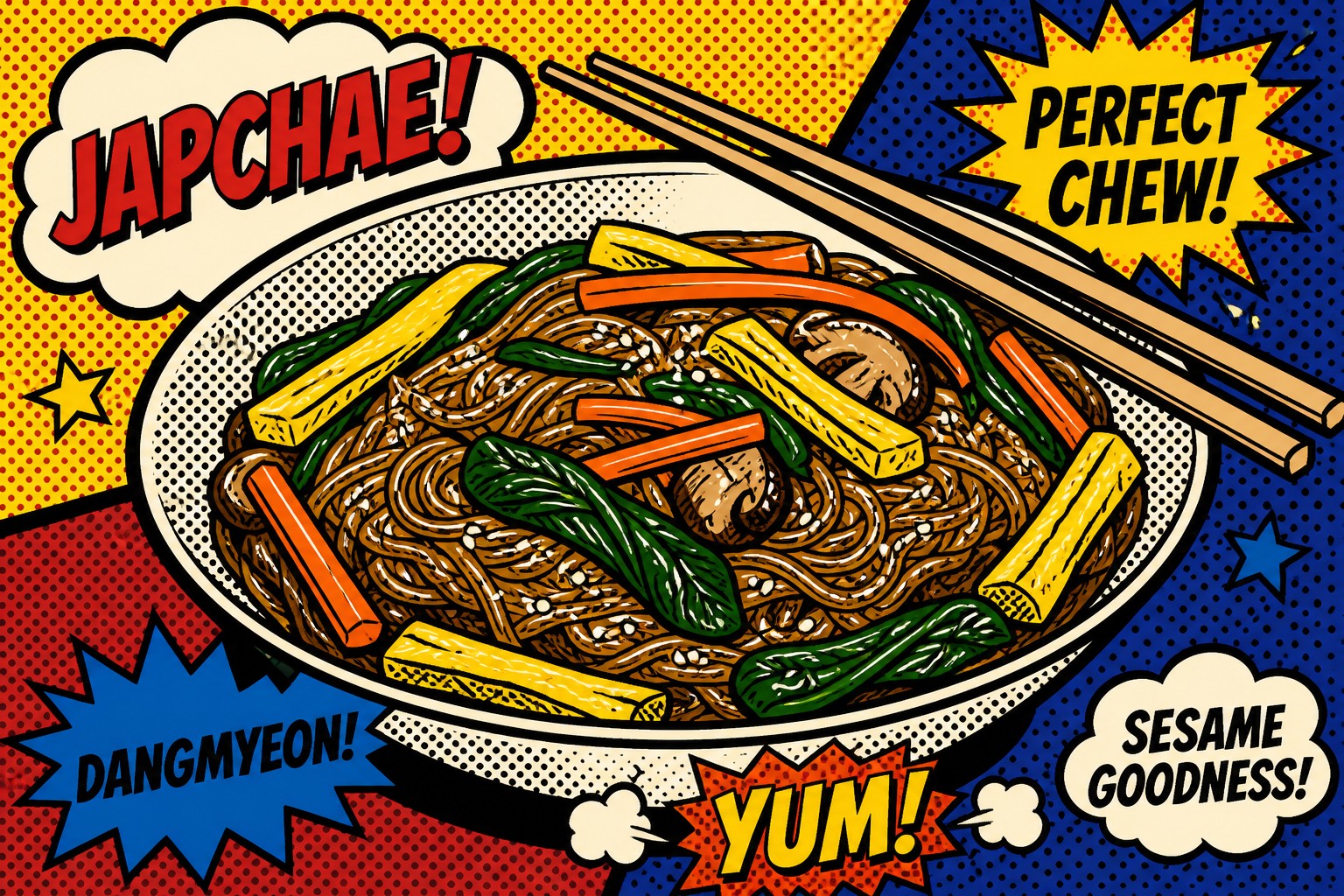
Sweet potato glass noodles are not rice noodles — how to cook dangmyeon so it stays springy, not gummy or greasy.
TL;DR
Sweet potato glass noodles are not rice noodles — how to cook dangmyeon so it stays springy, not gummy or greasy.
Dangmyeon is made from sweet potato starch, which makes it translucent, elastic, and unusually tolerant of wok heat compared with mung bean or rice noodles. Cook it 90 seconds past package directions until a strand stretches without snapping but still springs back — that extra 90 seconds is the difference between bouncy and brittle.
Rinse and cut is not optional. Immediately toss hot noodles in cold water to stop carryover cooking and wash off surface starch that would gum the stir-fry; drain thoroughly, then cut into 15–18 cm lengths with kitchen shears so every chopstick pull mixes instead of dragging one endless noodle.
Oil the noodles first. Toss drained strands with 1 Tbsp sesame oil and 1 Tbsp soy sauce before they meet vegetables; that pre-season coat keeps them separate and seasoned to the core even if the final wok step is brief. Noodles absorb flavor better at rest than under flame.
Texture target is a clean bite without oil pooling. If your japchae feels greasy, you added too much oil to the vegetables and then the noodles soaked it; if it feels sticky, you skipped the cold rinse or crowded the noodles while boiling. Both fix on the next batch with no extra ingredients.
Store cooked japchae correctly. Refrigerated, noodles firm up as starch retrogrades; reheat gently with a splash of water covered for 90 seconds, then re-toss with a few drops of sesame oil. That rehydration returns spring without re-frying.
Across the Kimchee Network
More from the Kimchee Network