METHODS · 2026-08-14
One-Pan vs. Classic Separate Stir: Which Japchae Is Yours?
By Japchae Curator
The shortcut one-pan japchae saves dishes — the classic separate-stir earns clearer color and better chew. Taste both and choose honestly.
TL;DR
The shortcut one-pan japchae saves dishes — the classic separate-stir earns clearer color and better chew. Taste both and choose honestly.
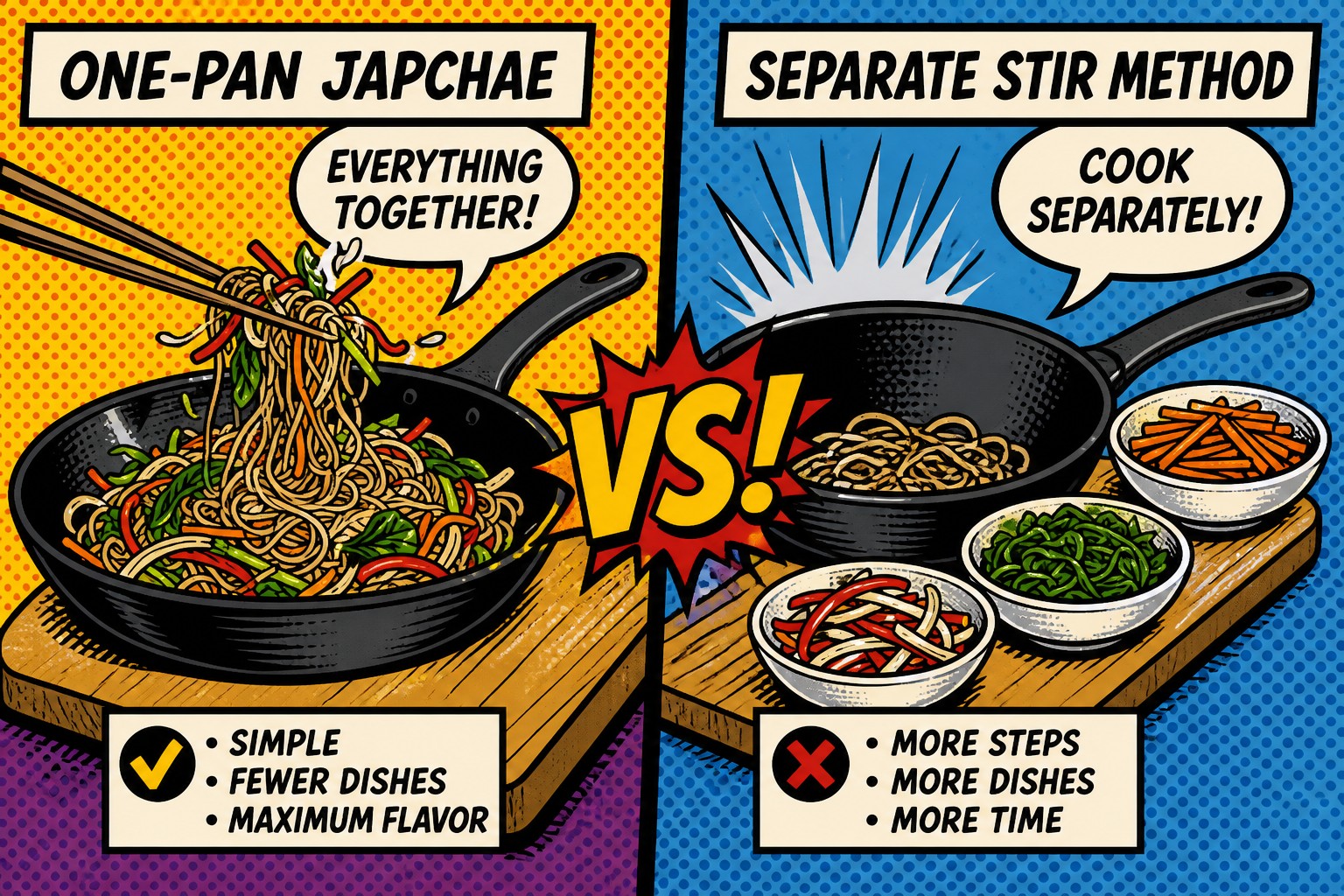
One-pan japchae sells itself: cook noodles, add vegetables in sequence to the same wok, sauce at the end, one plate. For weeknight speed it is 80% of the result in 40% of the time — hard to argue against when you are feeding tired people.
Classic separate stir is the 100% version. Each vegetable gets its own 60–90 seconds with a pinch of salt and a teaspoon of oil, then rests while the next cooks; noodles are sauced separately, then everything tosses at the end. The payoff is distinct colors and none of the watery pooling that one-pan sometimes traps.
Taste blind: separate-stir japchae looks like a jewel box with each vegetable identifiable; one-pan often reads more homestyle and slightly saucier with softer carrots. Both can be delicious — the tell is whether your carrots still have bite and your spinach is still green.
Hybrid compromises exist. Cook spinach alone always, batch carrots with peppers, and batch onion with mushrooms; that two-batch shortcut keeps spinach dry and saves one or two pan washes. If you only change one habit, keep spinach solitary.
Pick by occasion. One-pan for Wednesday dinner, separate-stir for holidays, potlucks, or any time someone will eat with their eyes first. The technique is seasoning for the eyes.
Across the Kimchee Network
More from the Kimchee Network