HISTORY · 2026-08-09
Royal Court Origins: When Japchae Had No Noodles
By Japchae Curator
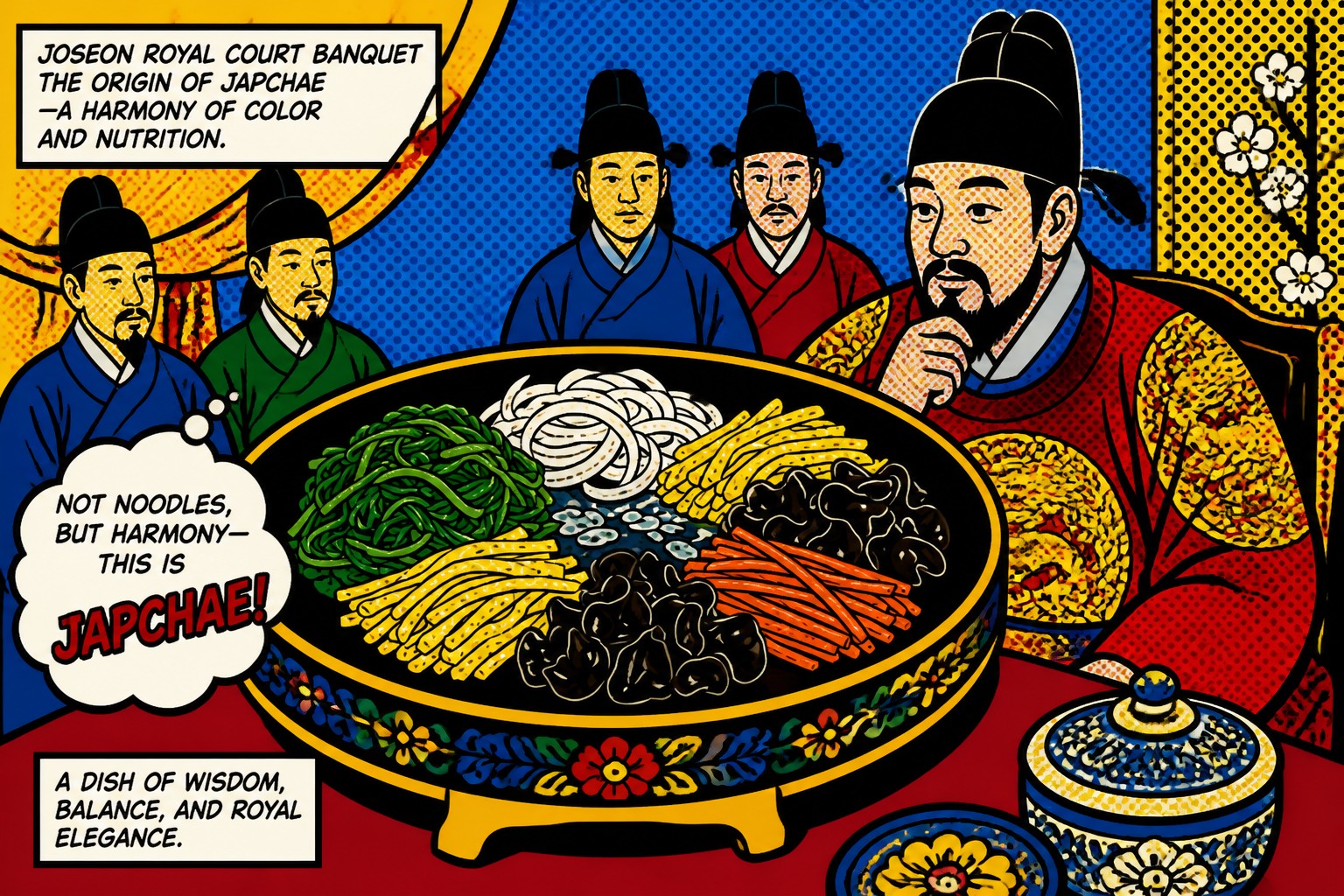
Japchae began as a royal stir-fry without dangmyeon — a Joseon banquet dish that only later became the noodle dish we know.
TL;DR
Japchae began as a royal stir-fry without dangmyeon — a Joseon banquet dish that only later became the noodle dish we know.
The first japchae was not noodly at all. Court records place a vegetable-and-mushroom japchae served to King Gwanghaegun in the early 1600s, prized for knife precision and color arrangement (obangsaek) rather than starch. Sweet potato noodles entered later, in the 20th century, after Chinese sweet potato starch became widely available.
Color discipline is the court legacy that survived. Classic japchae arranges five families: green spinach, white onion, yellow egg, black wood ear or shiitake, and orange carrot or bell pepper — not random stir-fry but a palette. That visual grammar is why japchae reads festive on a table without explanation.
Banquet logic also explains why each vegetable is cooked separately. The royal kitchen treated each ingredient on its own heat and seasoning so nothing steamed together into muddiness; modern home cooks keep that discipline by flash-cooking spinach, carrots, onions, and mushrooms in sequence before the final toss.
Beef arrived as an accessible luxury layer after the court period, not as the definition. Early commoner japchae used more mushrooms and tofu when meat was scarce; today's soy-marinated beef strips are a celebration addition you can dial up or down without betraying the dish.
Understanding the origin frees you from noodle anxiety. If your table is mushroom-heavy and light on meat, with precise cuts and balanced sweet-savory seasoning, you are honoring japchae's older identity even before the glass noodles hit the pot.
Across the Kimchee Network
More from the Kimchee Network